
Introduction
On paper, most end of line packaging machinery looks the same—they all seal, wrap, and palletize. But the real gap appears once the production grind begins.
"Budget" machine often hides a mountain of invisible costs: sluggish speeds, wasted film, and support that vanishes when a sensor fails at 2 AM. These "savings" are usually swallowed by the first week of unplanned downtime. High quality packing systems aren't just about the price; they’re about the stability you don't have to think about every shift.
Looking past the paint and basic specs to evaluate long-term reliability is a mandatory step before investing in any machine.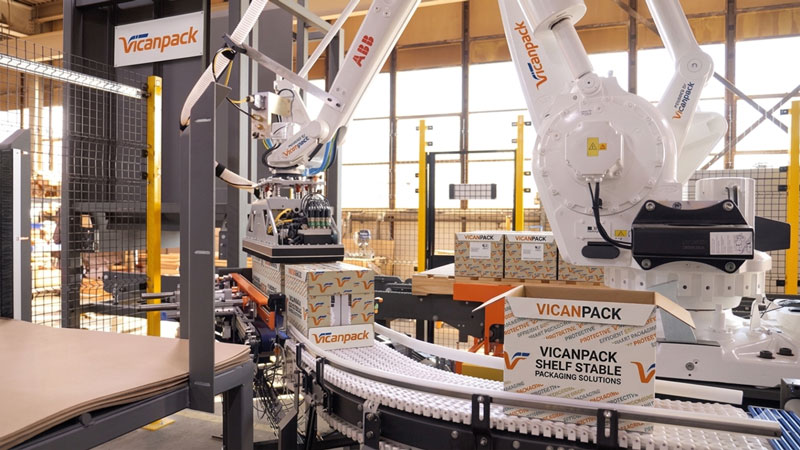
What is End of Line Packaging Machinery
If you've ever watched orders pile up at the end of a manufacturing line on a Friday afternoon while your team rushes to package, seal, and palletize before the shipping deadline, you know exactly where the pressure is greatest. And this is precisely the problem that end of line packaging machinery is designed to solve.
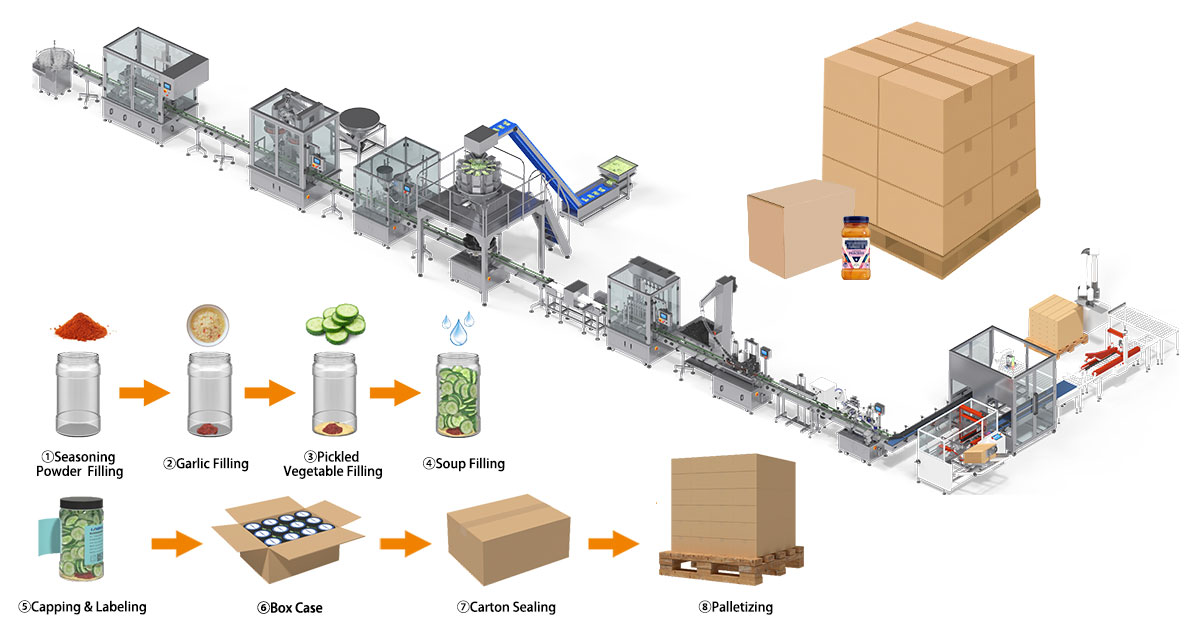
End of Line Packaging Machinery refers to the packing systems that handle your products once they’ve been bottled and bagged. If primary packaging is the bottle or bag, and secondary packaging is the carton it goes into, the third packaging machinery ensures that case is sealed, labeled, and stacked on a pallet, ready for distribution.
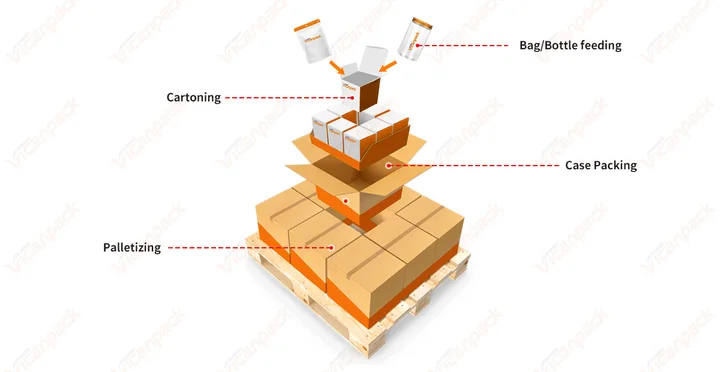
Common Types of End of Line Packaging Machinery
Before you start figuring out how to choose end of line packaging equipment, it’s helpful to understand the different types of equipment available. Most businesses don’t just purchase a single machine; instead, they opt for a complete end of line packaging solutions , where different systems work together seamlessly.
|
Type |
Typical Purpose |
|
Case Erector |
Automatically forms empty boxes / cases from flat blanks |
|
Case Packer |
Loads products into cases |
|
Case Sealer |
Seals / close cartons after filling |
|
Labeler |
Applies labels / barcodes to products or cases |
|
Accumulation Conveyor |
Temporarily holds or spaces products |
|
Stretch Wrapper |
Wraps pallet with film for stability |
|
Filling and Packing Machine |
Adds products into bags / bottles |
|
Palletizer |
Stacks cases or products onto pallets |
|
Case packing system |
Integrated erecting, filling, sealing systems |
|
Shrink Wrapper |
Covers products with heat shrink film |
|
Coding & Marking System |
Prints batch / expiry / traceability codes |
Considerations when buying end of line packaging machinery
Here are seven key considerations drawn from real customer cases to help you avoid common pitfalls:
1. Start with Your Actual Production Needs
Many buyers focus on achieving the highest possible speed at the start. This approach often creates problems later. A company may purchase a high-speed case packer rated at 25 cases per minute. However, the upstream filling line may only produce 15 cases per minute on average. The machine then operates far below its intended capacity.
The opposite situation can also occur. A sudden increase in orders may create a bottleneck. This happens when the case sealer requires long changeover times. Maybe the infeed conveyor lacks the buffer space to handle a surge. When that happens, you’re left with a backed-up line and a team forced into overtime just to hit shipping deadlines.
In simple terms, companies should match packaging equipment to their actual production capacity. This alignment helps prevent inefficiency. Getting this line balance right is the only way to kill off those hidden bottlenecks and stop bleeding money on machine you aren't fully utilizing.
2. Verify Compatibility with Your Product
Not every machine works well with every product. A machine may run smoothly for one product but fail with another. This usually happens when compatibility is not tested in advance. You should prepare detailed product data. This data should include size, weight, and material, and also include packaging material details. Ask the manufacturer to test the machine using your actual products before making a decision.
3. Higher Automation Isn't Always Better
Higher automation is thought to be the greatest option by many buyers. This is not always the case. A palletizer or a fully automated case packer may use complex programming. The system may need to switch between formats frequently. These transitions can slow down production.
A semi-automated solution offers a different approach. Operators can make manual adjustments when needed. The system can switch formats within minutes. This flexibility helps maintain steady production with minimal downtime.
A business that handles dozens of small-batch orders each day can benefit from this approach.The degree of automation should be determined by your actual production process rather than merely technical requirements.
4. Ensure Compatibility with Your Existing Line
New equipment must work smoothly with your current production line. Many companies face issues when machines cannot connect properly. These issues often lead to delays and extra costs. You should provide your supplier with full details of your existing equipment. This information should include production speed and conveyor layout. Requesting an integration assessment before purchase.
5. Prioritize Reliability Over Speed
A machine that clocks 50 cycles a minute sounds great on a spec sheet, but it’s worthless if it spends half the shift waiting for a technician. Buying a high-speed machine just because it's cheap is a fast track to a bottleneck. On paper, the specs look great, but out on the floor, it’s a different story. True productivity doesn't come from those short bursts of speed—it comes from a rig that stays running without someone having to stand over it all day.
You need to look past the sales pitch. Pop the hood and actually check the guts of the machine. CE stickers are easy to slap on, but the real story is on the nameplates of the motors and PLCs. If those brands aren't household names, you’re basically signing up for a nightmare of hunting down obscure parts from overseas three years from now.
Honestly, skip the glossy brochures—they all say the same thing. Talk to their current customers instead. Seeing how a rig actually survives the daily grind of a real production floor is a mandatory step before you drop a cent of your budget.
6. After-Sales Support Determines Long-Term Costs
The purchase does not end when the machine is delivered. The real process starts after installation. Downtime often depends on how quickly support is available. You should check the supplier’s response time. You should also confirm spare parts availability. Good suppliers provide technical support, training, and clear service plans. These factors reduce long-term operational risks.
7. Consider Floor Space and Energy Consumption
Many buyers overlook space requirements. This can lead to installation problems later. You should measure your available space carefully. You should also allow room for operation and maintenance. In addition, energy consumption is an important factor. Energy-efficient machines can reduce long-term costs.
After considering the above seven key points for choosing a end of line packaging machinery, you may be wondering which partner can help you meet all these requirements and provide a reliable end of line packaging solution. Let us introduce Vicanpack (Foshan Lanfu Packaging Machinery Co., Ltd.).
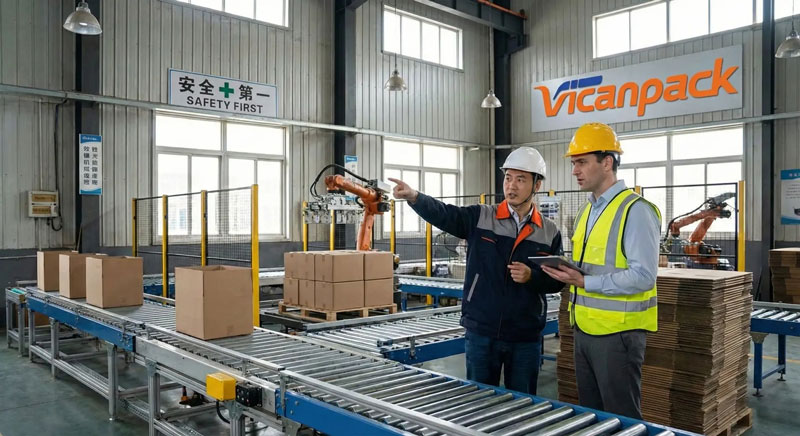
Why Choose Vicanpack (Foshan Lanfu Packaging Machinery Co., Ltd.)

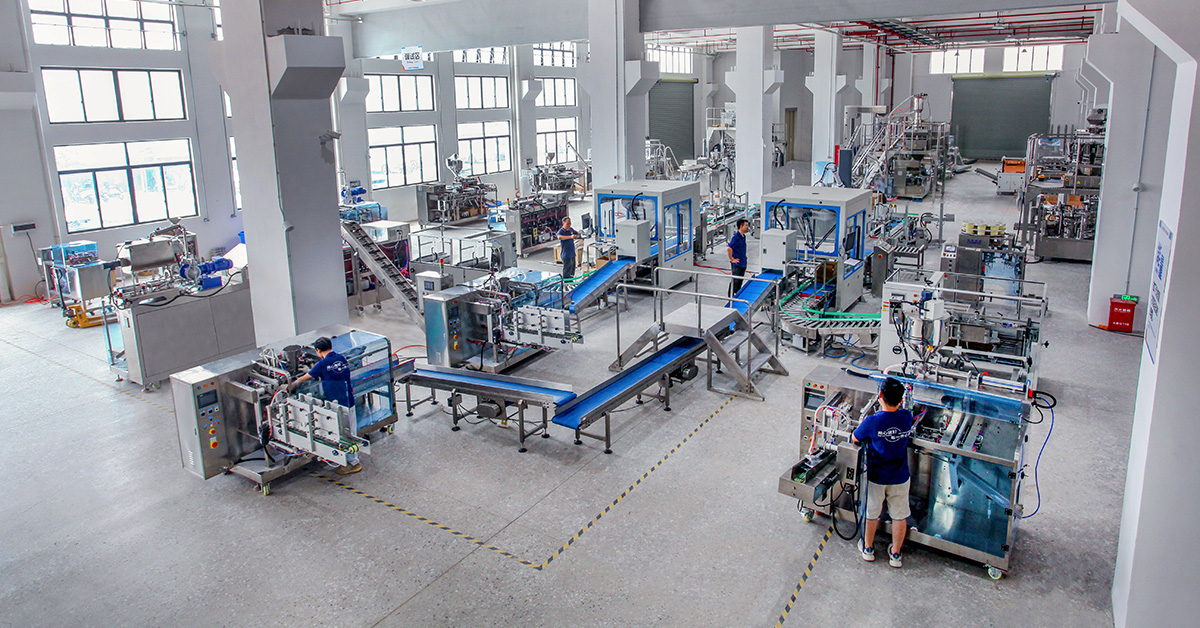
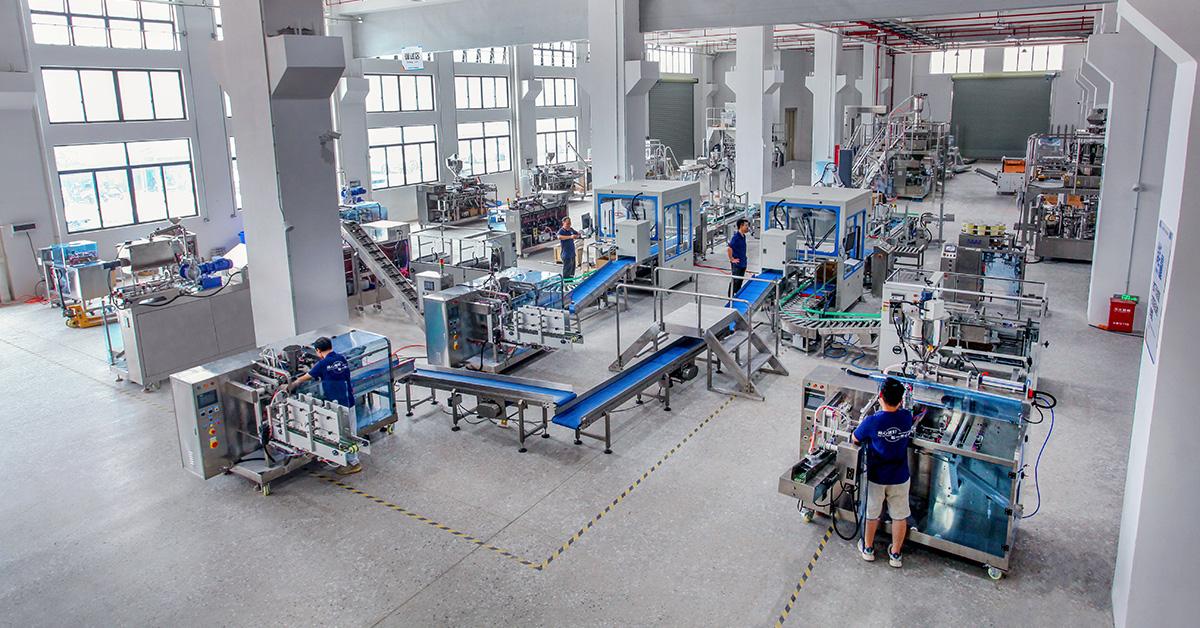
Vicanpack is a leading manufacturer of packing and filling machine in Foshan, China, with over 15 years of experience. Our advantages are as follows:
• Direct manufacturer (no middlemen): Communicate directly with machine design and technical team.
• Rich experience: We design end of line packing systems for diverse products. No matter what your product is, I believe we have a way to deal with it.
• CE certified: All machines meet international safety standards for safe operation.
• Customization: We have many professional engineers to adapt designs to your specific space and product needs, giving you a customized packing solution for your product
• Global support: Video tutorials, 24/7 online help, and a dedicated engineer team and after sale team.
![FireShot Capture 103 - Packaging System - End of Line Packaging Solution - [www.packingsystem.com].png](https://ptwebimg-12.pinshop.com/i/2026/03/27/n6rlrz-0.png)
FAQ
● Q: Is end of line packaging machinery difficult to operate for non-technical staff?
undefined
A: Not anymore! Our machines use intuitive touch screens with simple icons, we also provide machine training services and instructions.
● Q: How long until I see a return on investment?
undefined
A: Most of our clients see a return within 12-18 months due to labor savings and reduced product damage.
● Q: We are startup business, Can we start with this type of machine?
undefined
A: Yes! You can start with a basic case sealer and add a palletizer later as your business grows. Our packing systems are flexible and built to expand.
Conclusion
End of line packaging is not just equipment; it is a core part of your daily operation that will support your production for years. Choosing wisely today avoids costly disruptions tomorrow.
At Vicanpack, we don't just sell machines—we start by studying your product sizes, line speed, and changeover frequency. Only then do we recommend a packing solution. We believe reliability matters more than specifications on a brochure.
If you need a tailored and dependable packaging line for your products, Vicanpack is here to support you . Contact us for more guidance.